
LVP vs Laminate Flooring: Which Is Better for Spring TX Kitchens?
LVP vs laminate flooring: Both look great and cost less than hardwood, but they perform very differently in a kitchen. This guide breaks down water resistance, durability, cost, and lifespan to help Spring TX homeowners make the right call before their remodel begins.
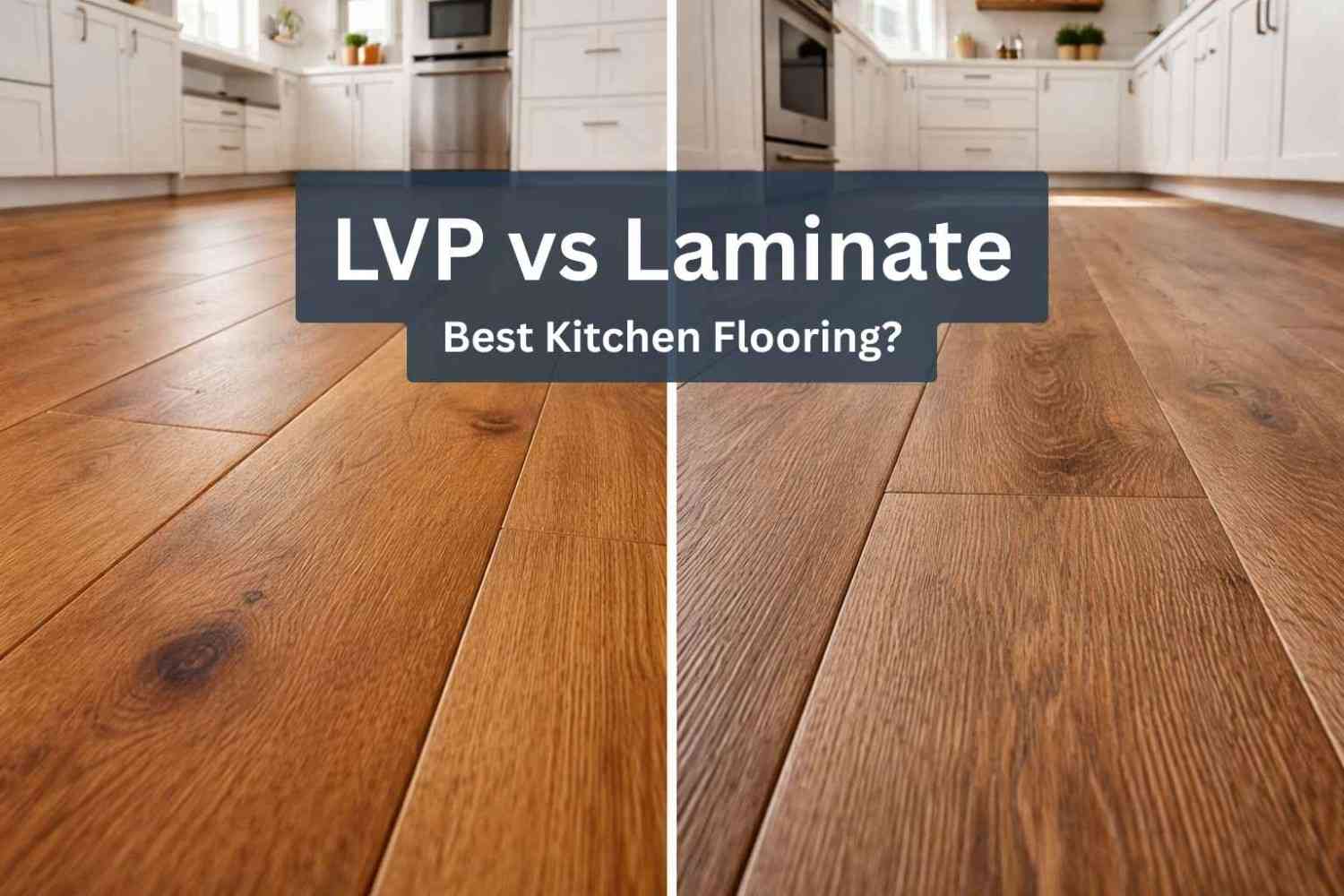
When homeowners in Spring TX start planning a kitchen remodel, the flooring question almost always comes down to the same two options: LVP vs laminate flooring. Both look like real hardwood, both cost far less than solid wood, and both are available at most flooring suppliers across Harris County. But they are built differently, they perform differently, and in a Houston-area kitchen, that difference matters more than most people realize.
Spring Kitchen Pros installs both LVP and laminate across Spring TX, The Woodlands, Cypress, and Conroe every week. This guide gives you a straight, honest comparison so you can walk into your remodel with a clear decision already made.
Want to see samples in your own kitchen before you decide? Call us at +1 346 268 5105 for a free in-home estimate and we will bring options directly to you.
Booking Online
What Is LVP Flooring?
LVP stands for luxury vinyl plank. It is a fully synthetic flooring made from PVC vinyl, built in multiple layers. The top layer is a wear coat that resists scratches and scuffs. Below that is a photographic image layer that mimics the look of real wood. The core is rigid or semi-flexible, and many options include a foam or cork backing for sound absorption.
The biggest advantage of LVP is that it is 100 percent waterproof. Not water resistant, waterproof. You can mop it freely, and a burst dishwasher line will not warp it. This makes it a strong choice for kitchens, bathrooms, and laundry rooms in Spring TX homes where humidity runs high from April through October.
LVP typically runs $4 to $8 per square foot installed in the Spring TX area, depending on the thickness and brand you choose.
What Is Laminate Flooring?
Laminate is a composite flooring with a dense fiberboard core, a printed image layer on top, and a protective aluminum oxide coating. Modern laminate looks realistic and feels solid underfoot. Many homeowners prefer the texture of laminate because it more closely mimics the grain and feel of real hardwood.
The catch with laminate is water. Traditional laminate absorbs moisture into its fiberboard core, which causes swelling and warping. Newer waterproof laminate options have improved this significantly, but even the best laminate cannot match LVP for outright water resistance. In a kitchen where spills happen daily, that difference matters.
According to the National Wood Flooring Association, laminate performs best in low-moisture environments like bedrooms and living rooms. Kitchens and bathrooms are considered higher-risk areas for laminate installation.
Laminate costs $4 to $14 per square foot installed, depending on the thickness, finish, and brand. Mid-range options of kitchen flooring installation in the Spring TX market typically run $5 to $9 installed.
LVP vs Laminate Flooring: Head-to-Head Comparison
Here is a direct comparison across the factors that matter most for a Spring TX kitchen remodel.
LVP vs Laminate Flooring Comparison Table
Feature | LVP Flooring | Laminate Flooring |
|---|---|---|
Water resistance | 100% waterproof | Water resistant (varies by product) |
Best for kitchens | Yes, ideal choice | Risky in high-moisture kitchens |
Scratch resistance | Good | Slightly better than LVP |
Feel underfoot | Softer, quieter | Harder, more realistic wood feel |
Install time | Faster , no acclimation needed | 48-72 hrs acclimation required |
Cost installed (Spring TX) | $4 to $8 per sq ft | $4 to $14 per sq ft |
Lifespan in kitchen | 15 to 25 years | 10 to 20 years (moisture dependent) |
Best rooms | Kitchen, bath, laundry, whole home | Bedrooms, living rooms, low-moisture areas |
Resale value | Stronger in kitchens | Lower in wet rooms |
Water Resistance: Why This Is the Deciding Factor in Spring TX
Houston’s humidity runs between 75 and 90 percent for most of the year. Spring TX sits in Harris County where summer heat and moisture combine to create conditions that stress flooring materials in ways that drier climates do not. A kitchen in Gleannloch Farms or Benders Landing sees condensation under appliances, steam from cooking, and spills every day.
LVP handles all of this without issue. The waterproof core means no swelling, no warping, and no need to rush when something spills. Laminate, even waterproof laminate, has weak points at the seams. If water sits in those gaps for more than a few hours, damage can start beneath the surface before you even notice it.
This is the single most important reason most Spring TX homeowners choose LVP for their kitchen and use laminate only in drier rooms of the house.
Luxury Vinyl Plank vs Laminate: Durability and Scratch Resistance
Laminate has a harder surface coating than most LVP products. That aluminum oxide layer resists fine scratches from pet claws, chair legs, and everyday foot traffic better than a vinyl wear coat at a similar price point. If you have large dogs and a kitchen that sees heavy use, laminate scores higher on this specific metric.
LVP, however, handles impact better. Drop a cast iron pan on laminate and you may crack the surface. The same drop on LVP typically leaves a dent that is much less noticeable. For most families in Harmony, Cypresswood, and Spring Trails, the everyday durability of LVP outweighs the scratch advantage laminate offers.
Cost Comparison: Which One Fits Your Remodel Budget?
At the entry level, both materials start around $4 per square foot installed. The mid-range is where they begin to separate. Quality LVP in the $6 to $8 range gives you a waterproof, durable product that performs well long-term. Mid-range laminate at the same price point looks great but carries the kitchen moisture risk.
Where laminate can trip homeowners up is replacement cost. A laminate kitchen floor that warps after three years because of a slow dishwasher leak ends up costing more than the premium LVP would have cost to begin with. Over a 10 to 15 year horizon, LVP is the more cost-effective choice for kitchens in Spring TX.
For a 150 square foot kitchen, here is what you can expect to pay for installed flooring in the Spring TX market in 2026.
- Mid-range laminate (waterproof): $750 to $1,350 total installed
- Entry-level LVP: $600 to $900 total installed
- Mid-range LVP: $900 to $1,200 total installed
- Entry-level laminate: $600 to $800 total installed
Look and Feel Underfoot
Laminate feels warmer and more solid underfoot. Its thicker construction and rigid core give it a feel that is close to real hardwood. LVP is softer and quieter, especially options with a built-in cork or foam backing. If you are going for a high-end wood look in a dry area, laminate may edge ahead. If comfort and sound reduction matter more, LVP has the advantage.
Installation
Both use a floating click-lock installation method, which means neither is glued to the subfloor in most cases. LVP installs faster because it does not need to acclimate to room temperature before installation. Laminate typically needs 48 to 72 hours to adjust to the room conditions before it can be installed. For a kitchen remodel on a tight timeline, LVP shaves off a few days.
Lifespan
LVP typically lasts 15 to 25 years with normal use. Laminate in a dry area can last 20 to 30 years, but in a kitchen exposed to regular moisture, that lifespan can shorten significantly. Homes in Gleannloch Farms and Woodson’s Reserve where we have done work over the years tend to see laminate replacement in kitchens much earlier than in bedrooms or living rooms.
Best Kitchen Flooring in Spring TX: Our Recommendation
For kitchens in Spring TX, LVP is the better choice for most homeowners. The waterproof core, the faster installation, the lower maintenance, and the long lifespan in humid conditions all point in the same direction. Laminate belongs in bedrooms, home offices, and living rooms where moisture is not a daily concern.
That said, if you are working with a tight budget and your kitchen has very low moisture exposure, a quality waterproof laminate rated for wet areas is a reasonable option. Just make sure the product you choose has a sealed HDF core, not standard fiberboard.
Homes in Woodson’s Reserve, Champions Forest, and Springwoods Village where buyers expect quality finishes tend to be listed with LVP in the kitchen when they hit the market. Real estate agents in these communities have told us that LVP in the kitchen moves faster in the $400,000 and above price range than laminate does.
A Quick Summary: LVP vs Laminate for Kitchens
- Water resistance: LVP wins, fully waterproof vs water resistant
- Scratch resistance: Laminate has a slight edge
- Comfort underfoot: LVP is softer and quieter
- Install time: LVP installs faster, no acclimation required
- Cost: Similar entry price, LVP offers better long-term value in kitchens
- Lifespan in kitchens: LVP lasts longer due to moisture durability
- Best for Spring TX kitchens: LVP is the recommended choice
Thinking about new flooring for your kitchen? Contact Spring Kitchen Pros for a free in-home estimate. We serve Spring TX, The Woodlands, Cypress, Conroe, Tomball, and Klein. We will measure your space, bring samples, and give you a detailed written quote within 48 hours.
Frequently Asked Questions
Is LVP or laminate better for a kitchen floor?
For kitchens, LVP is the better choice in most cases. It is fully waterproof, handles daily spills without damage, and holds up well in high-humidity climates like Spring TX. Laminate is water resistant but not waterproof, which makes it a riskier option in rooms with regular moisture exposure.
How much does LVP flooring cost to install in Spring TX?
LVP flooring in Spring TX typically costs $4 to $8 per square foot installed, including materials and labor. For a 150-square-foot kitchen, that puts the total between $600 and $1,200. The price depends on the LVP thickness, brand, and subfloor condition. Thicker planks of 7mm or more cost more but offer better durability and sound insulation.
Does laminate flooring hold up in kitchens?
Standard laminate does not hold up well in kitchens over time. Its fiberboard core absorbs moisture at the seams, which leads to swelling and warping. Newer waterproof laminate products perform better, but even those carry more risk than LVP in a kitchen setting. If you choose laminate for your kitchen, go with a product specifically rated for wet areas.
Can LVP be installed over existing tile or flooring?
Yes, LVP can often be installed directly over existing tile, vinyl, or hard flooring as long as the surface is flat, dry, and in good condition. This saves time and money on demolition. However, if the existing floor is uneven or damaged, it needs to be addressed first. A professional assessment during your free estimate will determine whether direct installation is possible.
How long does LVP flooring last in a kitchen?
Quality LVP flooring lasts 15 to 25 years in a kitchen with proper care. Thicker planks with a higher wear layer rating last longer. Regular sweeping and damp mopping are usually all the maintenance required. Avoid steam mops, as the heat can break down the adhesive in some LVP products over time.
Which flooring adds more value to a home in Spring TX?
Both LVP and laminate add less resale value than hardwood, but LVP generally performs better in home valuations because of its durability and waterproof properties. Spring Kitchen Pros has seen buyers in ZIP codes like 77379 and 77381 respond more positively to LVP in kitchens than laminate, especially when the home is positioned above the $400,000 price range.