
LVP vs Tile Which Kitchen Flooring Is Better for Spring TX Homes?
LVP and tile are both solid kitchen flooring choices for Spring TX homes. LVP costs less, installs faster, and handles daily spills without any issue. Tile lasts longer, stays cooler underfoot in Texas summers, and adds more resale value. This guide breaks down cost, durability, climate performance, and maintenance so you can pick the right floor for your kitchen and budget.
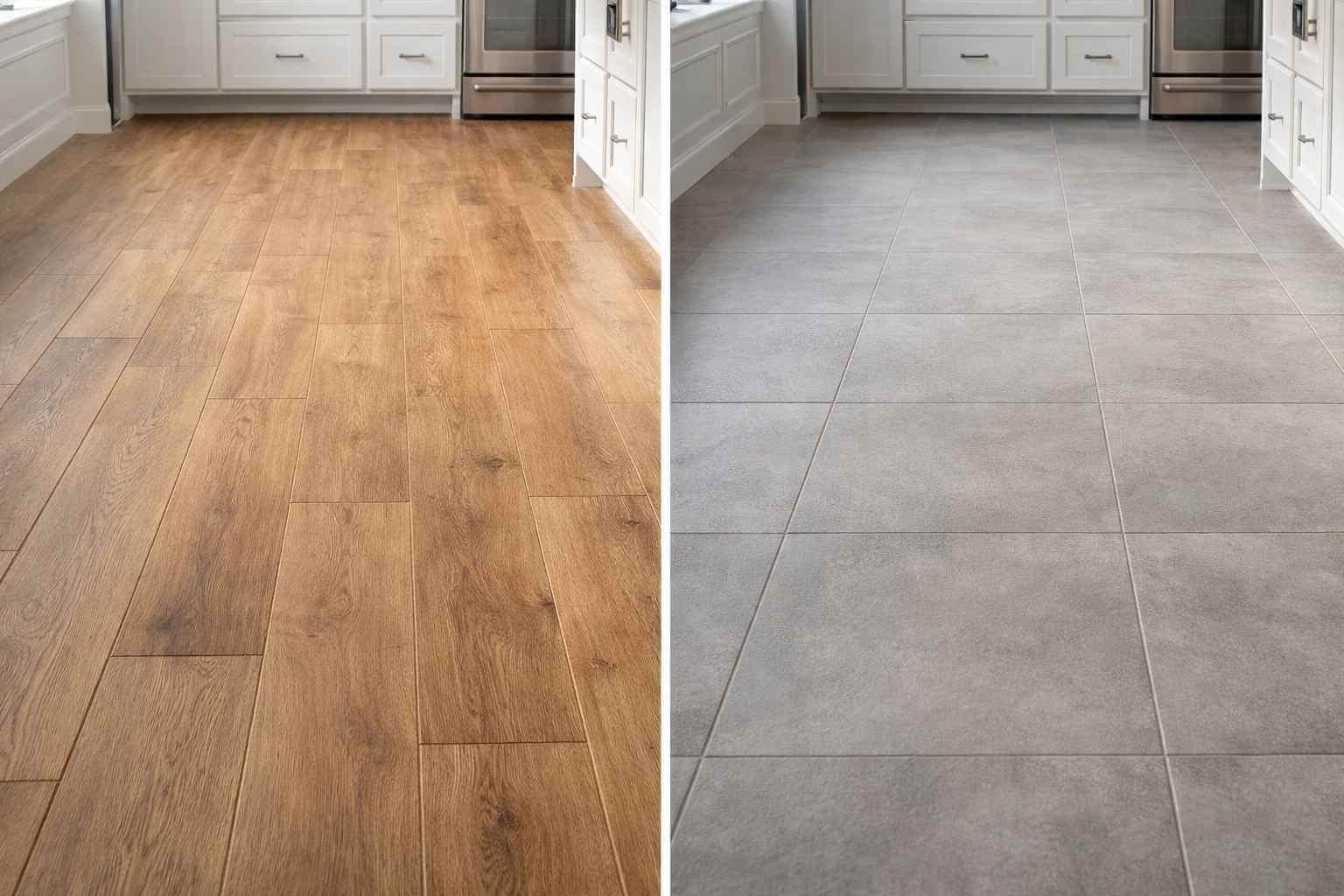
Spring Kitchen Pros gets this question all the time from homeowners in Gleannloch Farms, Harmony, and Benders Landing: should I go with LVP vs tile for my kitchen floor? Both are solid choices for Spring, TX homes. But the right answer depends on your budget, your lifestyle, and how long you plan to stay in the house.
This guide breaks down both options clearly so you can make a decision without second-guessing yourself.
Want help choosing the right flooring for your kitchen remodel? Contact Spring Kitchen Pros for a free in-home estimate.
Booking Online
What Is LVP Flooring?
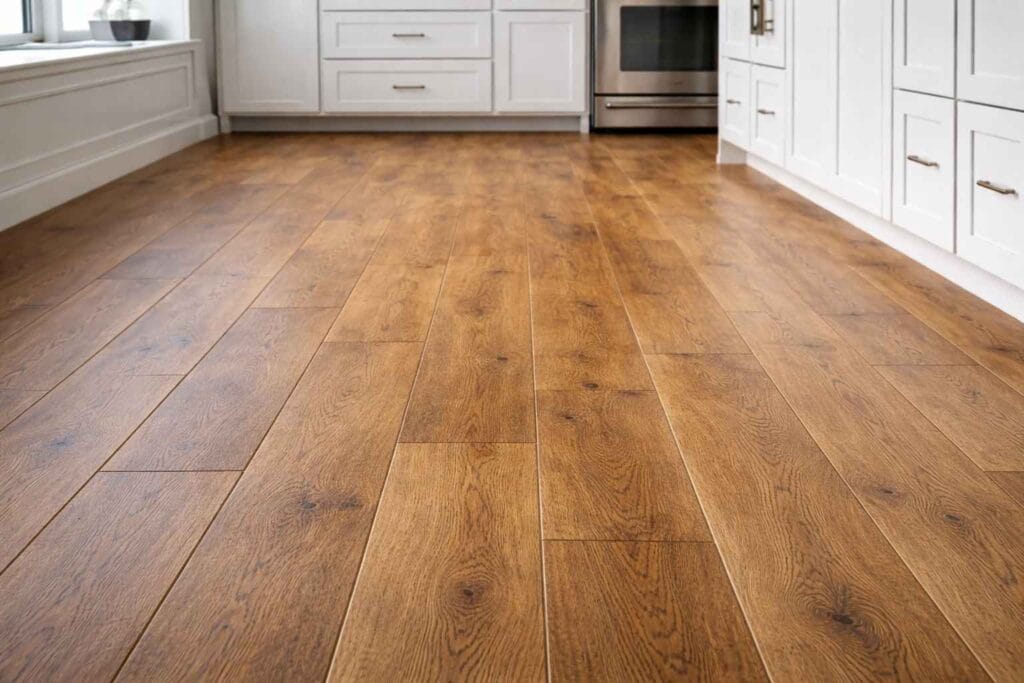
LVP stands for Luxury Vinyl Plank. It is a multi-layer synthetic flooring that mimics the look of real hardwood or stone. The core is rigid and 100% waterproof, which makes it a top pick for kitchens, bathrooms, and any room where spills happen daily.
Most LVP sold today uses SPC (Stone Plastic Composite) construction a dense core that resists dents, temperature swings, and moisture from below. It clicks together during installation without glue or nails, which keeps labor time short and costs lower than tile.
Popular LVP brands for kitchen remodels include COREtec, Shaw, and Armstrong. Most products carry a wear layer of 12 to 20 mil, which determines how long the floor holds up under daily use.
What Is Tile Flooring?
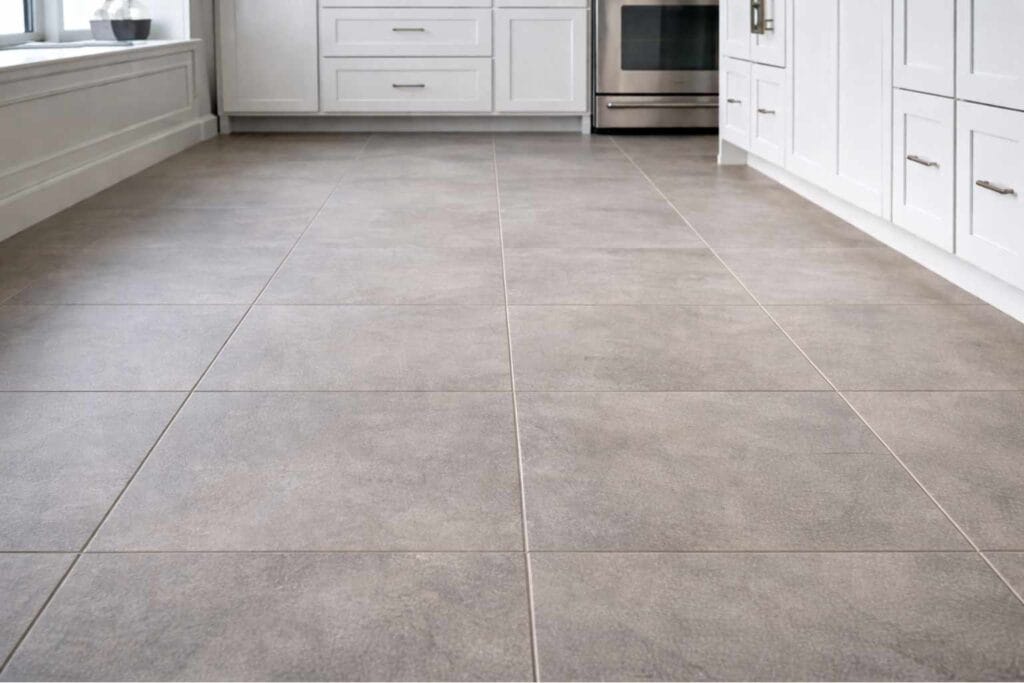
Tile has been the go-to kitchen floor in Texas homes for decades, and for good reason. Porcelain tile and ceramic tile are hard, dense, and nearly impossible to scratch under normal conditions. A properly installed tile floor can last 30 to 50 years with basic upkeep.
Porcelain is denser and more durable than ceramic. It handles heat, heavy traffic, and moisture better, which is why most remodelers recommend porcelain for kitchens. Ceramic tile is a budget-friendly alternative that works well in lower-traffic kitchens.
The trade-off with tile is installation time. Mortar needs to set, grout needs to cure, and the subfloor must be perfectly level otherwise tiles crack. The whole process typically takes 3 to 5 days compared to 1 to 2 days for LVP.
LVP vs Tile: Side-by-Side Comparison
Factor | LVP Flooring | Tile Flooring |
|---|---|---|
Cost (Material + Labor) | $4–$11 per sq ft installed | $6–$15 per sq ft installed |
Comfort Underfoot | Softer, warmer feel | Hard and cold without radiant heat |
Water Resistance | 100% waterproof core | Waterproof but grout absorbs moisture |
Durability | 15–25 years with care | 30–50+ years with maintenance |
Installation Time | 1–2 days most rooms | 3–5 days (mortar + grout curing) |
Maintenance | Sweep + damp mop only | Grout cleaning + resealing needed |
Scratch Resistance | Good — can dent under heavy loads | Excellent — nearly scratch-proof |
Resale Value | High — buyers appreciate LVP | Highest — tile is premium material |
Spring TX Heat & Humidity | Stable, will not warp | Stays naturally cool underfoot |
How Much Does Kitchen Flooring Cost in Spring TX?
Cost is usually the first question homeowners ask, and the difference between LVP and tile is real.
LVP Flooring Cost in Spring TX
For a standard kitchen in Spring, TX, LVP flooring installation typically runs to 1 per square foot installed. That includes materials and labor. For a 200 square foot kitchen, you are looking at roughly 00 to ,200 total depending on product quality and subfloor condition.
Budget LVP starts around to per square foot for materials. Premium SPC products with thicker wear layers run to 0 per square foot. If your subfloor needs leveling or old flooring needs to come out, add another to per square foot.
Tile Flooring Cost in Spring TX
Tile costs more mostly because installation is labor-intensive. Ceramic tile runs to per square foot for materials. Porcelain ranges from to 2. Add to 0 per square foot for professional installation and you are at to 0 per square foot all-in.
For the same 200 square foot kitchen, tile can run ,200 to ,000 or more for a full porcelain installation. Intricate patterns, large-format tiles, or heated subfloor systems increase that further.
LVP saves you money upfront. Tile costs more initially but its long lifespan can make it cheaper per year over 20 to 30 years.
Which One Handles Spring TX Heat and Humidity Better?
Spring, TX sits in Harris County part of Greater Houston, and the climate here is no joke. Summers push well above 90°F for months, humidity stays high, and kitchens deal with steam, spills, and condensation every single day.
How LVP Performs in the Texas Climate
Modern SPC-core LVP is built for exactly this. It does not warp, swell, or buckle in humid conditions the way hardwood or laminate would. Its waterproof construction means spills and steam from cooking cannot damage the core. Flooring specialists in the Houston area consistently recommend LVP for kitchens because of this.
One thing to watch: LVP can fade with prolonged direct sunlight. If your kitchen gets strong afternoon sun through west-facing windows, go with a fade-resistant product or keep blinds drawn during peak hours.
How Tile Performs in the Texas Climate
Tile has always performed well in Texas heat. Porcelain and ceramic are naturally cool underfoot a real bonus during long summer months when the kitchen gets hot. They do not expand or contract with temperature changes, and they handle moisture and steam without any issue.
The only climate-related concern with tile in Spring, TX is grout. Grout is porous and absorbs moisture over time if not properly sealed. Resealing grout every 1 to 2 years keeps it protected and prevents mold from forming in the joints.
Both materials handle the Spring TX climate well. Tile stays cooler underfoot in summer. LVP is more forgiving with subfloor movement during extreme heat cycles.
Which Kitchen Flooring Is Right for Your Home?
Here is a simple way to think about it based on your situation.
Choose LVP if:
- Your budget is under ,500 for kitchen flooring
- You have kids, pets, or a high-traffic household
- You want installation done in one to two days
- Comfort underfoot matters to you especially barefoot cooking
- You plan to sell the home within 5 to 10 years
Choose Tile if:
- You are doing a full luxury kitchen remodel and want premium materials
- You plan to stay in the home long-term 10 years or more
- You want the coolest possible surface during hot Texas summers
- You prefer a material that cannot scratch or dent under normal use
- Resale value is a top priority and you want to attract buyers who expect upscale finishes
Can You Use Both in the Same Space?
Some homeowners in Springwoods Village and Champions Forest do both tile in the main kitchen area and LVP in the adjoining living room or dining space. This gives you the durability and cool surface of tile where cooking happens and the warmer, softer feel of LVP in connected living areas. Spring Kitchen Pros can help you plan transitions between materials so the result looks intentional, not patchy.
What Spring TX Homeowners Are Choosing in 2026
In a recent kitchen remodel in Harmony, the homeowner had a similar question. They were working with a 0,000 budget for a mid-range kitchen renovation and were torn between LVP and large-format porcelain tile.
After reviewing the layout a 185 square foot kitchen with a connected dining area and two dogs Spring Kitchen Pros recommended SPC-core LVP in a warm oak finish. The installation finished in a day and a half. The homeowner reported zero issues after the first year, including through two Houston flood seasons where humidity spiked indoors.
For a different project in Benders Landing, the homeowner was doing a full luxury renovation targeting resale. There, the choice was clear: large-format 24×24 porcelain tile in a matte concrete look. It added to the premium feel the property needed and the home sold above asking price within three weeks of listing.
Frequently Asked Questions
Is LVP or tile better for a kitchen in Spring TX?
Both work well in Spring, TX. LVP is better for budget-conscious homeowners who want fast installation, comfort underfoot, and low maintenance. Tile is better for long-term durability, heat resistance, and resale value in luxury remodels. The right choice depends on your budget, timeline, and how long you plan to stay in the home.
How long does LVP last in a kitchen?
Quality SPC-core LVP typically lasts 15 to 25 years in a kitchen with normal use. The wear layer thickness matters most go with 20 mil or higher for kitchens. Avoid dragging heavy appliances directly across the surface to prevent dents.
Does tile add more value to a home than LVP?
In most cases, yes. Porcelain tile is considered a premium material by buyers and appraisers. That said, high-quality LVP also adds solid resale value, especially in the Spring TX market where buyers expect durable, low-maintenance kitchens. The gap in resale value has narrowed as LVP quality has improved.
Can LVP be installed over existing tile in my kitchen?
Yes, as long as the existing tile is flat, firmly bonded to the subfloor, and in good condition. Click-lock LVP can float over tile without removal. This saves money on demo and disposal. Spring Kitchen Pros will assess your existing floor before recommending this approach.
What is the most popular kitchen flooring in Spring TX right now?
In 2025 and 2026, SPC-core LVP has become the most requested kitchen flooring in Spring, TX and the broader Greater Houston area. It offers the look of wood or stone at a lower cost, handles Texas humidity well, and installs faster than tile. For luxury remodels, large-format porcelain tile remains the premium choice.
Get a Free Kitchen Flooring Estimate in Spring TX
Spring Kitchen Pros installs both LVP and tile in kitchens across Spring TX, The Woodlands, Conroe, Cypress, and Tomball. Whether you need help deciding between the two or already know what you want, our team walks you through every option with no pressure and no hidden fees.
Contact Spring Kitchen Pros today for a free in-home kitchen flooring consultation. Visit springkitchenpros.com or call us to schedule your estimate.